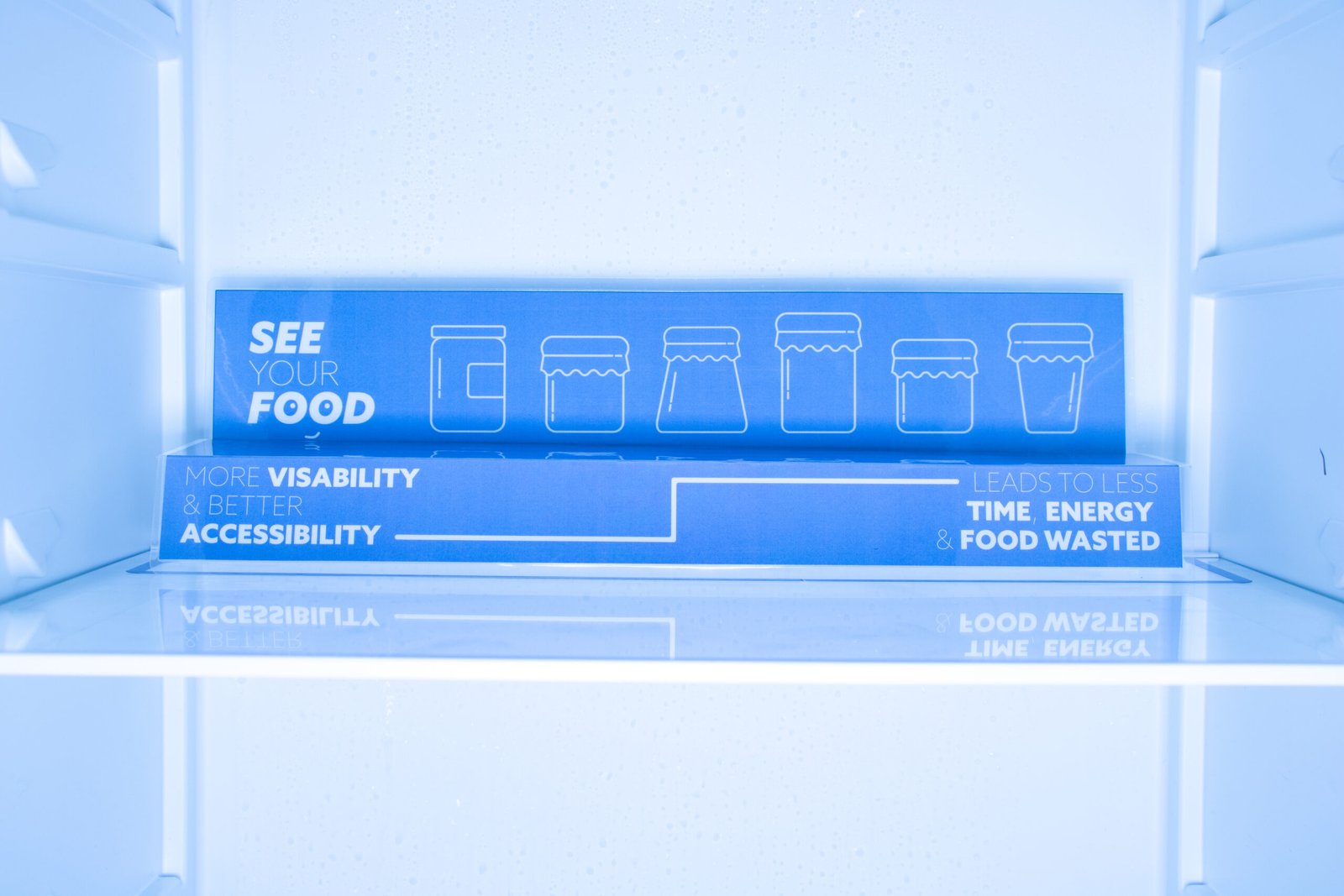
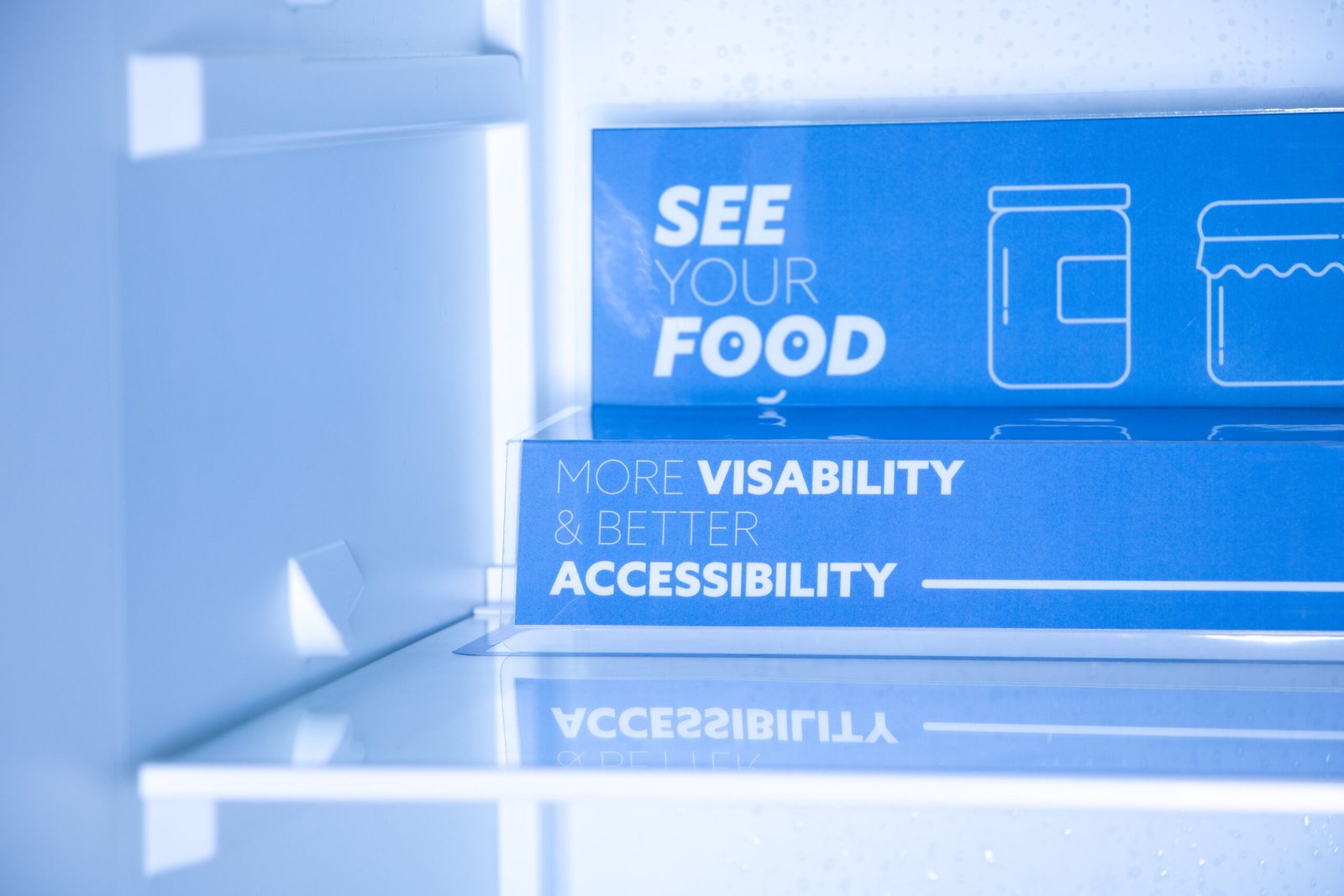
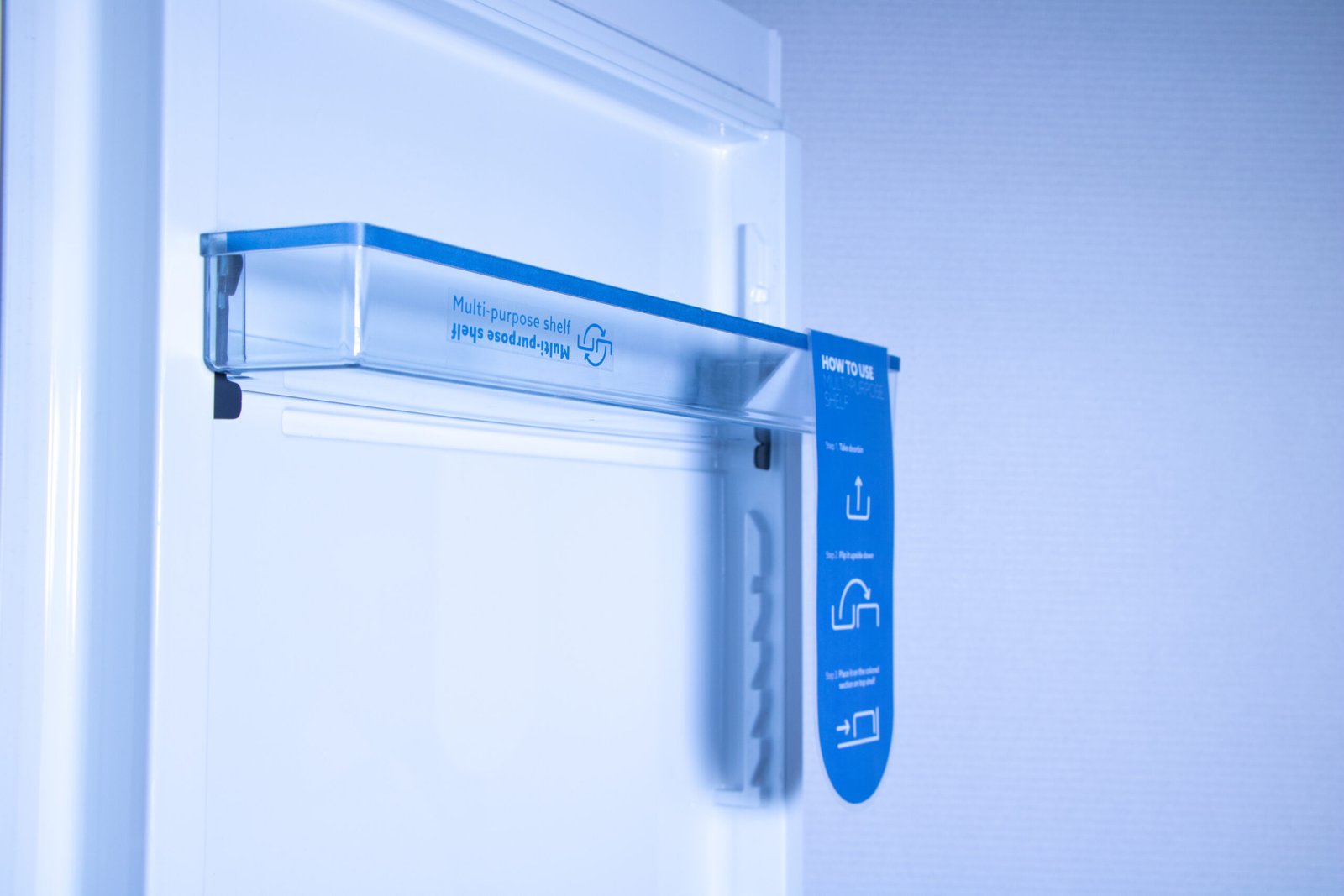
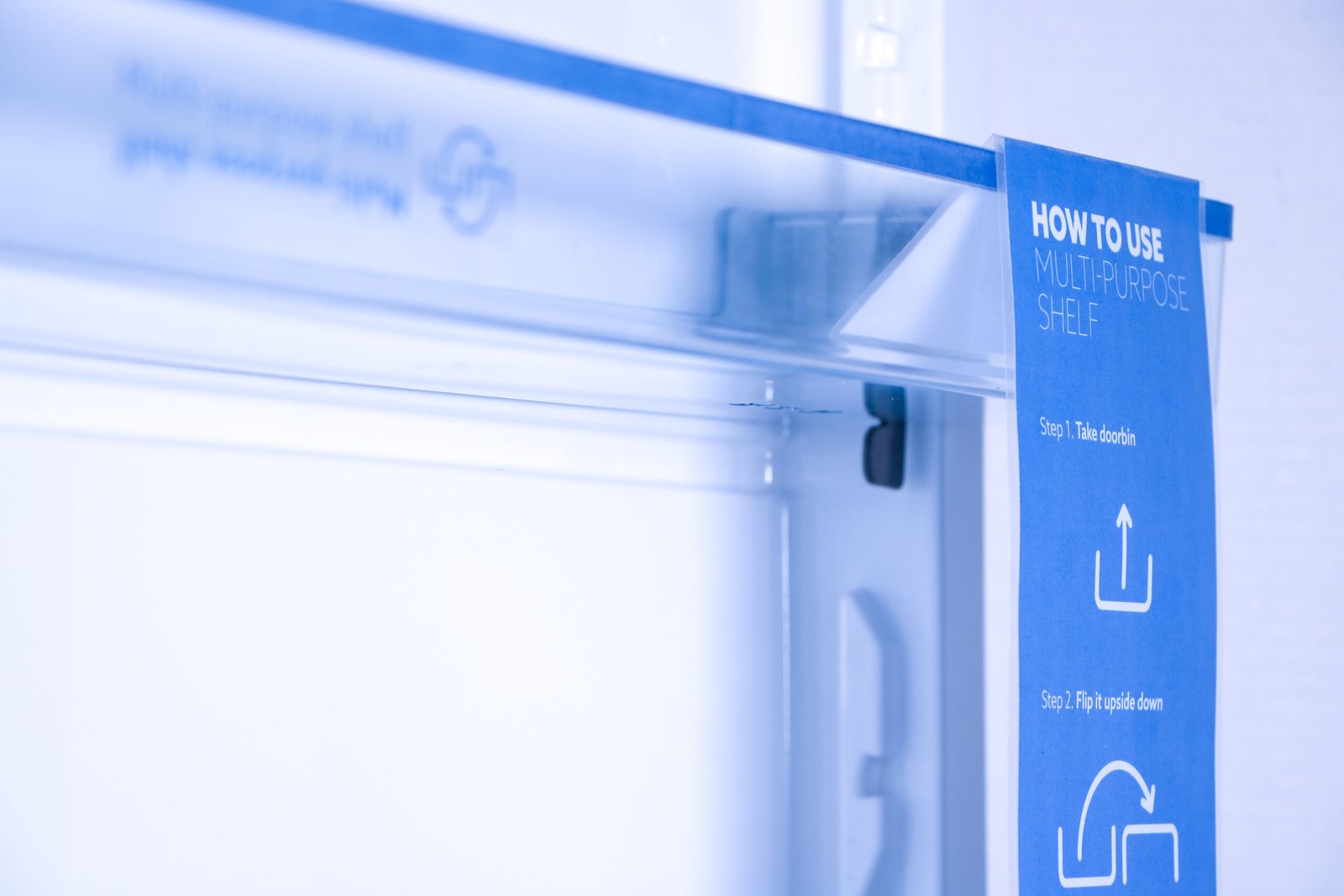
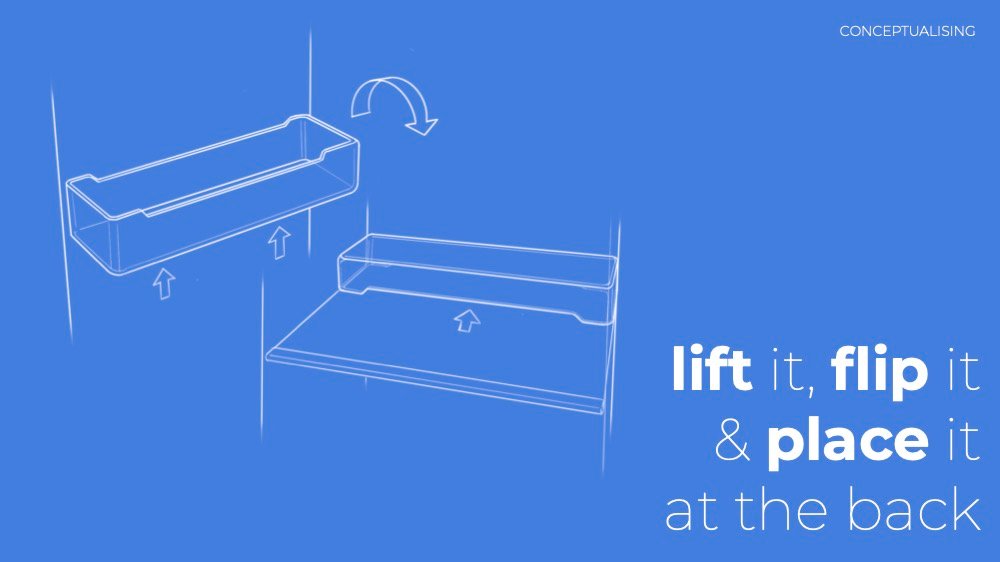
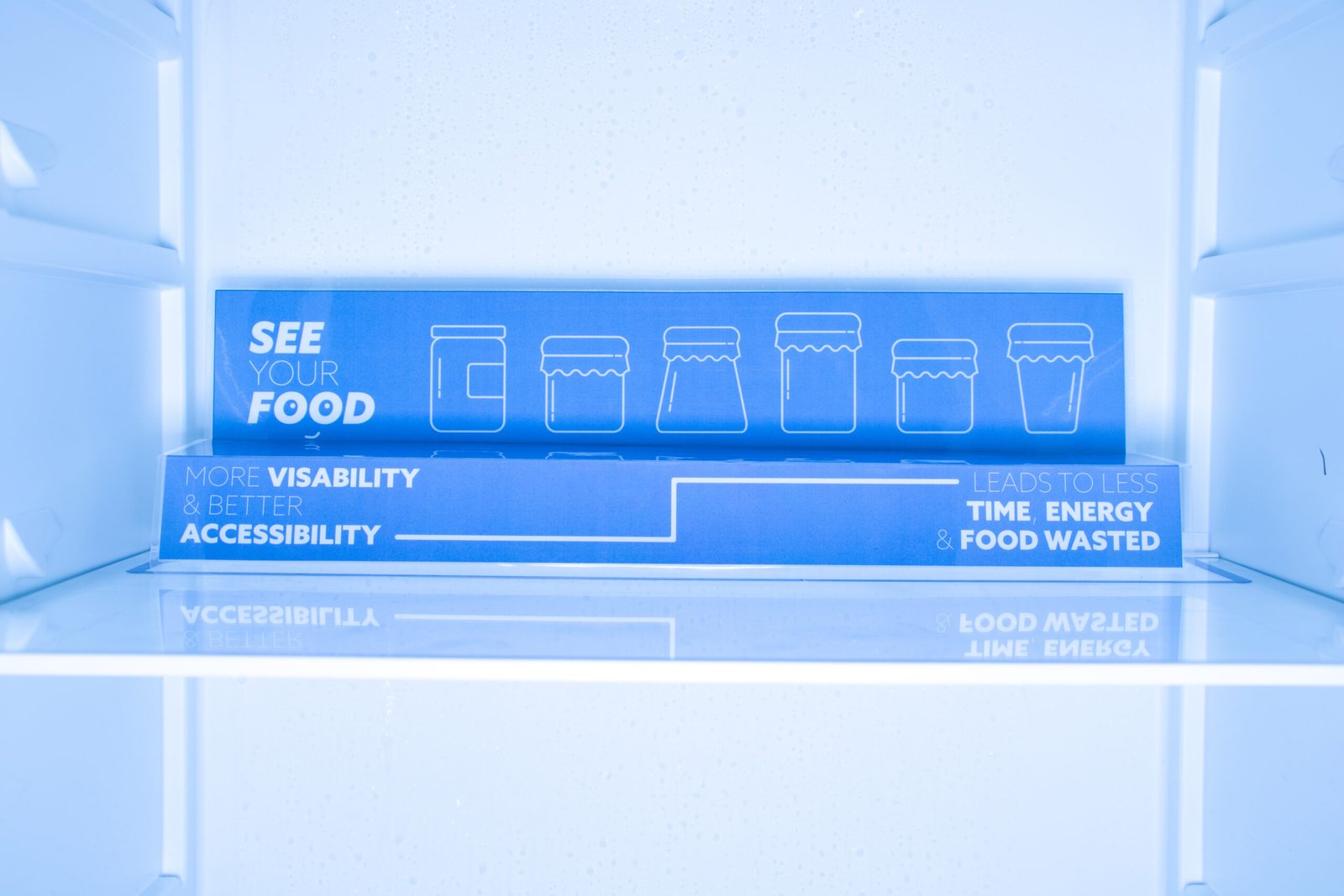
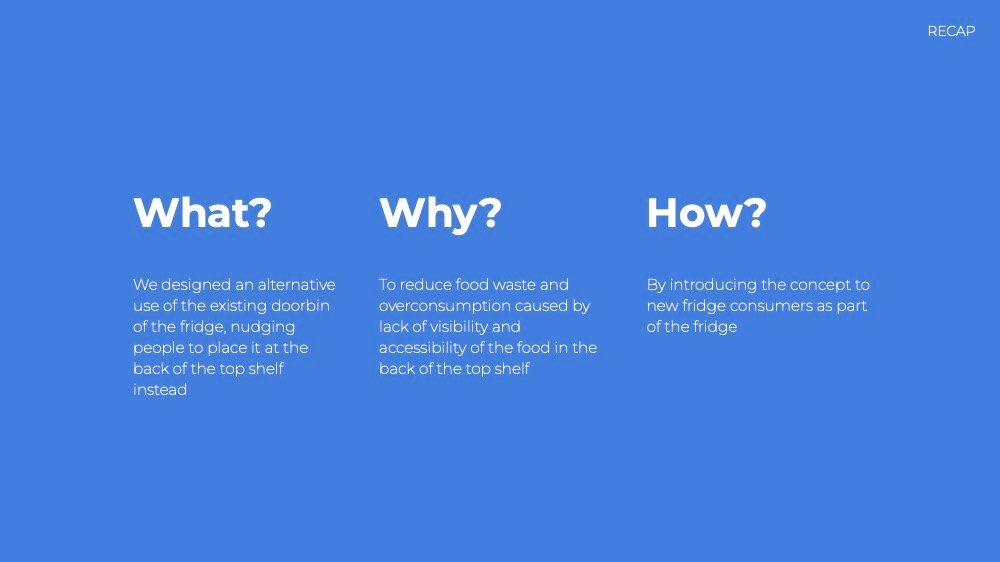
This Master’s project focused on addressing systemic issues of overconsumption and food waste through behavioral design. Rather than introducing a new product, our research and participatory findings led us to a high-impact, low-friction solution: relocating the door shelf to the top shelf of the fridge to improve visibility and food management.
Key Contributions:
- Collaborative Execution: Working with a multidisciplinary team, we balanced complex behavioral insights with a minimalist design approach, ensuring the final concept was both accessible and highly practical.
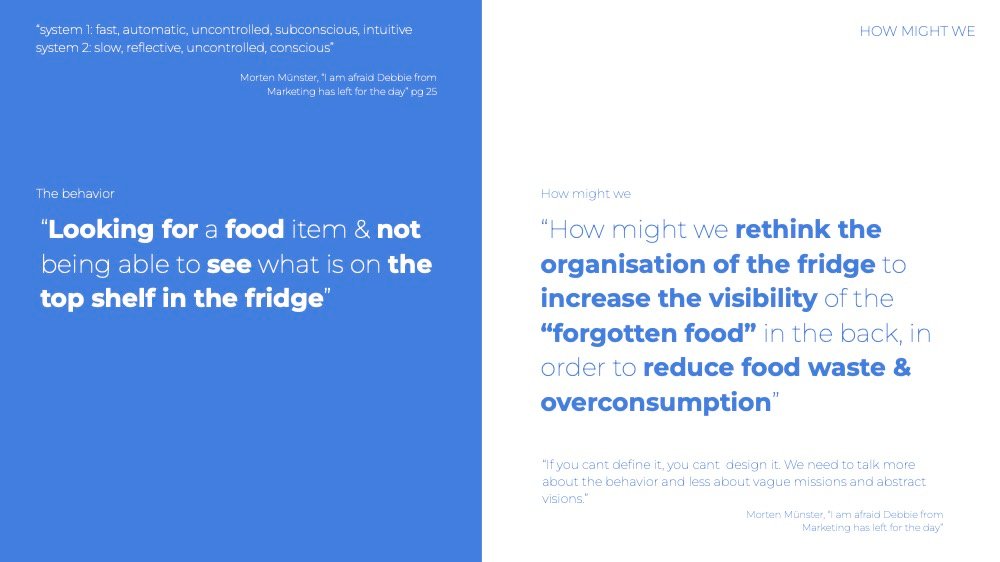
- Research-Led Strategy: Rooted in “System 1” cognitive thinking, we moved beyond conventional product design to identify a simple, architectural shift that seamlessly integrates into existing kitchen habits.
- Behavioral Framework: By utilizing color-coded communication and intuitive shape-matching, we successfully bridged the gap between user intent and sustainable action.
- Systemic Impact: The final concept creates a more efficient, sustainable kitchen experience that benefits both the consumer and the environment by reducing unnecessary waste.